Monday, 24 March 2014

Life in Beijing

Anthony Ryan lives in Beijing, where he works as an EFL teacher at Aihua English Academy. Here he gives a brief insight into what it's like living and working in one of the world's biggest cities.

When I first came to Beijing, I expected to find a city packed with people and choking on the pollutant fumes of its own success; in fact when I think of it like this I wonder why I came at all. However coming here has opened my eyes to the wonders of Chinese culture and the joys of Mega city living. Yes, there is smog (although it’s not nearly as bad as you think), it is crowded and the incessant beeping of car horns could push you over the edge if you were having a particularly bad day; but, the city is charming, it worms its way into a place in your heart and it never leaves.


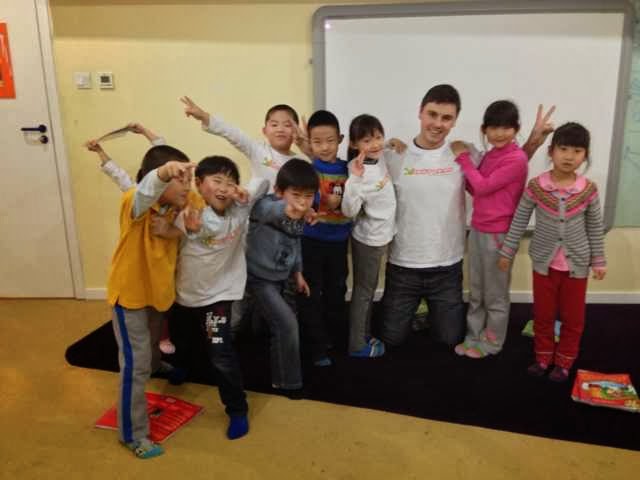
Anthony (back right), with fellow Aihua teachers

Beijing is the setting for a war between history and modernity, a city fixated on the goal of progress but anchored in the past. It has ultra-modern, Westernised areas such as Sanlitun and areas which would not look out of place 500 years ago. In the centre of the city there is a sprawling network of shanty houses called Hutongs which are the heart of Beijing’s character and charm, here one can wander for hours constantly discovering new places to eat and drink.

The people match this description also; it is not uncommon to encounter an elderly man or woman staring into the screen of a brand new IPhone or a young couple playing Mah-jong on the street. Perception is a dangerous thing here as what you perceive to be the truth is not often the case and city life moves along guided by subtle societal norms which only become apparent after living here for some time.

One example is the oft overcrowded but amazingly efficient subway system, from the outside looking in it is difficult to imagine how the Chinese can fit so many people onto their mass transit systems, but once you get used to it, you realise that everybody on the carriage needs to get somewhere and to do this in a timely manner they collectively sacrifice some of their personal space (something which is already at a premium in Beijing), this idea of collective sacrifice for the greater good is almost wiped out in the West but here in Beijing it’s second nature.

Day to day living in Beijing is like living in a pantomime where none of the actors know they are actors and the audience is uninterested anyway. Right next to a bastion of western culture like McDonald’s, it is likely you can find a farmer selling fruit or a vendor selling delicious street food.

It is a different world to back home, a city which runs on its own time and to its own unique beat. If you are the type of person who enjoys a challenge in life you will love Beijing, it is an amazing place with all the creature comforts of home, plus a few new ones to discover.

English classes at Aihua
To find out more about positions at Aihua then take a look their website and Facebook page.

Tuesday, 18 March 2014

Five Famous EFL Teachers

Many of you may be wondering where taking a TEFL course will lead you. Well for some people it might just be something short term, others will end up spending the rest of their career in teaching and a select few might just go on to become household names! You may be surprised to hear that a number of famous people have tried their hand at EFL teaching. Here we take a look at five people who have taught English overseas and gained fame or fortune for a variety of reasons.

1. Ranald MacDonald (1824-1894)


Not to be confused with the fast food clown, with whom he shares a spookily similar name, Ranald was a true pioneer and one of the very first EFL teachers. Ever since he was a boy he had the urge to travel and in true adventurer spirit he quit his job at a bank and set sail for Japan, despite knowing that any foreigner who set foot on Japanese soil faced imprisonment or execution. He came ashore on Rishiri Island where he was caught and eventually sent to Nagasaki to teach English to Samurai warriors. These men would go on to become diplomatic interpreters who would help cool East-West tensions and bring a halt to Japan's isolationist policy. Although he received little recognition during his lifetime, there is now a memorial to Ranald in his Oregon birthplace, as well as two in his adopted homeland of Japan.

2. Anna Leonowens (1831-1915)


When she accepted an offer from the King of Siam (now known as Thailand) to be governess to his children, Anna Leonowens probably had no idea that she was about to embark on a journey that would be committed to print, stage and screen. In 1859 her life had been thrown into turmoil when her husband Thomas died of a haemorrhage while working at a hotel in Penang, Malaysia. She sent her daughter back to England to be educated and travelled to Singapore with her son where she received an invitation to work in the royal household of Siam. King Mongut wanted Anna to give his many wives and children a Western education, although they frequently clashed over what should and shouldn't be taught . She spent more than five years in Siam which were immortalised in the novel Anna and the King of Siam and the hit Rodgers and Hammerstein musical The King and I, which was later turned into a Hollywood film starring Yul Brynner and Deborah Kerr.

3. Wilfred Owen (1893-1918)


Dulce et Decorum Est is a poem that you will often hear recited on Remembrance Day or in tribute to any fallen servicemen. It was written by poet Wilfred Owen in 1917 as a way of expressing his anger at the cruelty of war. Owen had seen the horrors of the battlefield first hand while serving on the Western Front during World War One. Before fighting broke out however, he had been working in Bordeaux as a tutor at the Berlitz School of Languages. Owen died in battle at the age of just 25 but his poems live on as a reminder of the sacrifice made by those who lost their life to war.

4. J.K. Rowling (1965-)


J.K. Rowling is one of the world's best-known authors. She is responsible for creating the Harry Potter series, which has sold more than 400 million books, spawned a series of hit films and turned Rowling into a multi-millionaire. Before she got the inspiration for the boy wizard however, she taught English in Portugal. Working in the city of Porto, she taught in the evenings while writing in the day. It was here that she met her husband, the Portuguese journalist Jorges Arantes, although they later divorced.

5. Ed Norton (1969-)


You will no doubt recognise the award-winning actor from his star turns in Fight Club, The Incredible Hulk and American History X. But what you may not know is that after graduating from Yale University he worked for his grandfather's company, Enterprise Community Partners, in Osaka, Japan. While there he appeared in an EFL textbook, Only in America, which was used by Nova English language school. He also gained one of his first acting credits by appearing in the company's hilarious instructional videos, an image from which can be seen below.


Friday, 14 February 2014

Love is in the air...

It's that time of year again. Love it or hate it, Valentine's Day is upon us once more. As people here in the UK spend the day exchanging cards, chocolates and flowers, we thought we would take a look at how it is celebrated in some top TEFL destinations around the world.

Giving gifts in Catalonia, Spain

1. Spain
Most Spaniards will be doing much the same as us Britons, except those in the North-Eastern region of Catalonia. Catalans instead celebrate La Diada de Sant Jordi (otherwise known as St George's Day) on April 23rd. Traditionally this is marked by men giving women roses and women giving them books in return.

2. Peru
As in most of Latin America, Valentine's Day is about friendship as well as love. Many Peruvians take part in 'Secreto Amigo'. The game is similar to Secret Santa and involves giving gifts anonymously.

3. Estonia
Estonians take the friendship theme even further. They observe Sõbrapäev on February 14th, which is a celebration based entirely on platonic love.

4. Saudi Arabia
Saudi authorities consider the holiday to be un-Islamic and as a result the sale of Valentine's Day gifts have been banned on a number of occasions!

5. South Korea
There are three separate celebrations in South Korea. On February 14th women give chocolates to men and a month later, on something known as 'White Day', they return the favour. A month after that, on 'Black Day', single South Koreans mourn their loneliness by eating a dark-noodle dish called Jajangmyeon!


Single South Koreans chowing down on 'Black Day'


Wednesday, 5 February 2014

Doha Days: From Merseyside to the Middle East

Vivien Smith took a UK-TEFL course in 2009 and within a few months she had found a job working in Doha at the Qatar International School. Five years on she is still there and is now Learning Resource Manager, after gaining successive promotions. We caught up with her to find out how she's enjoying life in the Middle East.

Vivien with some flowers she got from her students

Hi!

My name is Vivien Smith and I have been working at Qatar International School, Doha, for the past four years. We have 1,600 students ranging from four to eighteen years old and follow a British teaching system.

Before that I was working in local industry in Wirral, Merseyside. Like most people I was finding there was too much month at the end of the money and felt it was time for a change in profession. It may have even been a mid-life crisis. I knew I could do more, I just wasn't sure what.

After scouring the internet for inspiration I came across a course being advertised in Liverpool. After a bit of research, I thought this was just what I had been looking for. It was a whole new change of career and life, just what I needed.

So with some apprehension I thought I would give it a go to find out if it was for me. We all met at a local hotel. With a fabulous instructor by the name of Mike Furber. I managed to get through the first day. Even on the way home from the first day I felt a huge sense on achievement and thought 'I really can really do this'!

UK-TEFL Trainer Mike Furber in action

By the end of the course i was so excited to start a new chapter in my life and applied to Qatar International School. I started in November 2009 in Yellow class, pre-school, as a teaching assistant. What a fantastic experience it was, knowing I could actually make a difference to our students.

Then a place in the library came up. With my knowledge in private industry I thought 'I can do this'. I was still working with the students and making the most of my new found confidence and TEFL know-how. I was fortunate enough that I was appointed Librarian, then graduated to Senior Librarian, and then lo and behold Learning Resource Centre Manager.

The Learning Resource Centre at Vivien's School

I cannot thank UK-TEFL enough for giving me the confidence to go out in to the wider world with a knowledge that I could do it and make a difference, now five years later I am still in touch with my fabulous teacher Mike.

I have never looked back and would recommend anybody who thinks they aren't sure to give it a go. It was certainly worth it to me. Like me you may find you never know what you can do until you try. Doing nothing is never an option.

The Doha Skyline

Get your UK-TEFL certificate and you could be weeks away from working in Doha. Visit our website to find out more.

Friday, 31 January 2014

Here's to the Horse: Celebrating Chinese New Year

Today marks the start of 15 days worth of celebrations in honour of Chinese New Year. With more than 100,000 native English teachers currently working in China, it is the most popular destination for UK-TEFL graduates. As there are so many of you already over there, and even more no doubt headed in the same direction, we thought we would take this opportunity to learn a little bit about a very important part of Chinese culture.

2014: The year of the horse

Chinese New Year, also known as the Spring Festival, starts with the first new moon of the calendar year. Before festivities can begin people must spring clean their houses to sweep away any bad luck. They also decorate their homes with good luck phrases.

On New Year's Eve, families get together and have a traditional Chinese meal. This differs depending on the region you come from. In the South people eat nian gao, a sweet rice pudding, while in the North they tuck into jiaozi, a kind of steamed dumpling. People wear red and set off fireworks as a way of warding off evil spirits. They stay up until midnight to bring in the New Year.

On New Year's Day itself, children awake to find red envelopes filled with sweets and money that have been left by their parents and grandparents.

Jiaozi: Eaten at New Year in Northern China

The celebrations eventually come to a close with a lantern festival on the fifteenth day of the month. These lanterns are hand painted with scenes of Chinese legends and then hung from the windows of houses or carried under the light of the full moon. A dragon, made of paper, silk or bamboo is held aloft by young men who dance around trying to collect money.

Chinese New Year coming to a close

This year is the year of the horse. People born in the year of the horse are said to have horse-like personalities. They are animated, active, energetic, quick to learn independence and they have a straightforward and positive attitude towards life. They are also said to enjoy being in crowds and are noted for their wit and strong communication skills.

If you were born in the year of the horse then you're in good company. Other horses include model Cindy Crawford, astronaut Neil Armstrong and Mongol ruler Genghis Khan!

Cindy Crawford: A famous horse

Take a course with UK-TEFL and you could find work in China a matter of weeks. We have plenty of Chinese placements available, all of which can be viewed on our Finding Work pages.

Monday, 27 January 2014

Jake's Journey: From Royal Engineer to TEFL Teacher

After Jake Canning left the army he went from job to job looking for something that he would really enjoy. Then he took a UK-TEFL course and within a few weeks he found himself living and working in China. We caught up with Jake for a quick Q&A to find out how he is getting on.


1. Jake, tell us a bit about your background. What jobs did you do before you decided to become a TEFL teacher?

Before teaching TEFL I was employed in the British Army as a plant operator maintainer within The Royal Engineers, I was in the Army for 4 years and 10 months. In this time I worked in Belize, Kenya, Canada and Jordan, mainly on construction tasks. I left the Army in October 2012 to pursue a new career within regular life. Between October 2012 and November 2013 I have worked as a Heavy goods driver, worked for a property developer, office fitting company, sales consultant at a gym and a sales consultant at a mobile phone shop. I quickly went from job to job trying to find something that gave me the same happiness that the Army did.

2. What attracted you to TEFL teaching?

I did the TEFL course because you never know what’s around the corner and I wanted some extra qualifications on my CV. If I didn’t like the job I was in I could just take off.

3. How did you fund your training?

The Army funded my training. When you spend a certain amount of time in the Army you are eligible for a resettlement fund.

4. Which course did you do and where?

I did the 3 day course and it was in Manchester

5. How much did you enjoy the course and what was your favourite part?

I really enjoyed the course as I really opened my eyes to new areas of employment and how easy it was to find work. My favourite part about the course was all the people I met. I still keep in touch with my trainer Liz every now and then, to let her know how things are.


6. How did you go about finding your current job?

I found the job on the internet. I applied for 10 in China at about 10pm GMT. I left my phone on loud that night and was woken 5 times at early hours in the morning with responses to set up an interview.

7. How did the recruitment process work and how long did  it take before you started work?

I applied for my job on the 10th November had an interview the next day had another interview the day after that and got offered the job. I then went on to sell my car and flew out to China on the 21st November and started my first day at work on the 26th.

8. Where do you work and who do you teach? Can you describe a typical workday?

I work in Beijing, China. I teach children ranging from 2-12, although the centre I am at I think the oldest child is 9. I work for a company called First Leap. They have centers all over China and they are rapidly expanding, since leaving the Army I feel true happiness in my work. A typical working day consists of me starting work at 3.30pm. I could have between 2-4 classes on a week day. Today for example I have 2 classes, the first one is logical and critical thinking (Maths) then I have Art. If you are planning on coming to China I would advise brushing up on your Maths skills, as some of the kids I teach are as quick as calculators. I will finish work today at 8.30pm. In total I’m physically teaching the students 1 hour 25 minutes in total, the rest of the time I am in the office with the Chinese teachers and 4 other foreign teachers preparing for future lessons. Most of the lessons at First Leap we finish off with a craft of some sort that is relevant to the lesson. Sometimes I find myself smiling to myself, thinking “ I wonder how many jobs in the UK you can get paid to paint a butterfly or make a jellyfish out of paper plates and tissue paper”!

9. How are you settling in and finding life outside of the classroom?

I’m settling really well outside the classroom. I am used to spending months away from home. Some days it’s not easy when you have to get simple things done and nobody speaks English. The best thing about living in China is the different nationalities that you meet and the food. The food is cheap and tastes like something you may find in a top restaurant back home, but the Chinese sell it at a tenth of the price.

10.   What would you say to anybody considering a career in TEFL?

I would say to anyone thinking of taking a career in TEFL is really do your research on the area and company you work for. Although I am in a good company that treat me well I have met a lot of people along my travels that aren’t. You need to look into how much things cost in the area rent, electric, travel etc. Also find out before hand from the company you work for when your first pay day will be as you may need to bring more money with you. I never asked this question so I found out the hard way. All in all if you are considering taking the step you should go for it or it could be something you regret later in life. It is definitely worth having the TEFL certification on your CV as you never know what’s around the corner.

If you have any questions about living or working in Beijing, then you can email Jake on jake-canning@hotmail.co.uk 

Thursday, 2 January 2014

Ten reasons to TEFL in 2014

With 2014 now in full swing, people all over the world will be making promises to drink less alcohol, eat less junk food, stop smoking and exercise more. All this is done in the hope of becoming happier, healthier and more productive. But how about committing yourself to something that will be truly life-changing?

Taking a TEFL course could make this year the most memorable of your life. Here are ten reasons why you should TEFL in 2014:

1. Travel.
Ever heard the expression "'It's a small world"? Well it's just not true. With the arrival of South Sudan in 2011, there are now 196 recognised countries in the world, with a combined population of more than 7 billion. There's nothing small about planet earth, it's absolutely huge. Take some time to see it while you can. 


2. Experience a different way of life.
Getting a TEFL job means settling down in one place, at least for a short while. This means you can see the country through the eyes of a local, not a tourist. So go native and dive in head first by trying everything your new culture has to offer. Be it different food, drink, music, film, fashion, sports...everyday brings a fresh adventure which will broaden your horizons.


3. Make new friends.
Immersing yourself in a new way of life involves making every effort to interact with local people, no matter how big the language barrier. Do this and you could find yourself developing lifelong friendships that transcend cultures and continents. Wherever you end up in the world, you also will be surprised by how many other teachers you find there. Meet like-minded individuals from America, Canada, Australia, South Africa and many more English speaking countries. 


4. Gain confidence.
The idea of moving to a new country, or even standing up in front of a class, might fill you with dread. Once you have done it you will wonder why you spent all that time worrying. Living abroad will make you a more confident and independent person, while teaching will give you transferable skills you can use later in your career.  


5. Learn a new language.
Communicating in another language is one of the most rewarding things you can do. It can be tricky but the chance to practice on genuine native speakers makes your task a lot less difficult. Being able to speak the local lingo will also help you as you go about your day-to-day business. There's only so far that pointing and miming will get you!


6. Enjoy sunnier climes.
It's a special kind of person who likes British weather. It's renowned for being cold, dark, wet and windy and 2014 promises to be no different. Why put yourself through it when you could get a TEFL certificate and be sunning yourself on a boiling-hot beach within a matter of weeks?


7. Get a job!
It's not just the weather that's making people miserable in Britain. An uncertain economy and crowded job market have left many graduates feeling despondent as they fight it out for a limited number of vacancies. There are so many TEFL jobs available, you wouldn't believe it. There are more than 100,000 English teachers in China alone and they are still crying out for more candidates. Demand far outstrips supply as far as TEFL jobs are concerned.


8. Save money.
TEFL positions in some countries can be particularly lucrative. South Korea is a great example of this. A hefty wage packet coupled with the low cost of living mean that you can clear your debts and come back with some to spare!


9. Do something worthwhile.
Your reason for teaching doesn't have to be financially motivated. You can use your TEFL certificate to volunteer in a developing country and make a real difference. Teaching is one of the most rewarding things you can do, and giving up your time for those who need it the most makes it that much more enjoyable.


10. Why not?
Think long and hard about what's holding you back and you will soon find the answer...absolutely nothing. Take a look at our course dates and book yourself on today. All courses are Buy One Get One Half Price if booked before the end of January, so take advantage of this wonderful offer and make 2014 an unforgettable year! The New Year starts here!